Scotland’s Property Revolution: What The New Digital Assets Law Means for you
At ProTech Legal, our vision has always been to bridge the gap between traditional legal practice and the cutting edge of technology. We don’t just observe change; we help our clients navigate it. That’s why we are incredibly pleased to confirm that the Scottish Government has officially passed the Digital Assets (Scotland) Bill, marking a truly historic shift in Scots private law.
This isn’t just a piece of legislation for "tech people." It is a foundational change that will modernise how we understand, transfer, and invest in assets in Scotland. For our clients, particularly traditional property investors, it unlocks a new era of opportunity in real estate tokenisation.
Let’s break down exactly what this law solves, how it benefits you, and how it transforms the future of Scottish real estate.
Part 1: What The Problem Was (And What the Bill Solves)
Until now, the fundamental principles of Scots property law were designed around things you could physically touch (corporeal moveable property, like a car) or intangible rights that were already recognised by law (incorporeal moveable property, like shares in a company or intellectual property).
Digital assets — such as Bitcoin, Ethereum, stablecoins, and non-fungible tokens (NFTs) — didn’t fit neatly into either category.
The Conflict: "Information is not Property"
Historically, the law has often treated "information" as something that cannot be owned. A digital asset, at its core, is a string of electronic code. This created massive legal uncertainty:
If you "own" a digital asset, what do you actually own?
If it is stolen, is it theft of property, or just unauthorised access?
If you use it as security for a loan, is that a valid pledge?
This uncertainty meant that many institutional investors and traditional businesses were hesitant to engage with Scotland's digital economy, fearing that if things went wrong, they might have no legal recourse.
The Solution: A New Class of Property
The Digital Assets (Scotland) Bill solves this ambiguity. Based on the recommendations of an expert reference group chaired by Lord Hodge, the Act explicitly recognises a new, distinct category of property in Scots law.
Specifically, it clarifies that certain digital things are objects of property rights, provided they meet two criteria:
Rivalrous: This is a fancy way of saying "it cannot be copied." The digital asset must exist on an immutable ledger (like a blockchain) that prevents double-spending. If you send it to someone, you no longer have it.
Independent existence: The asset must exist independently of any individual legal system.
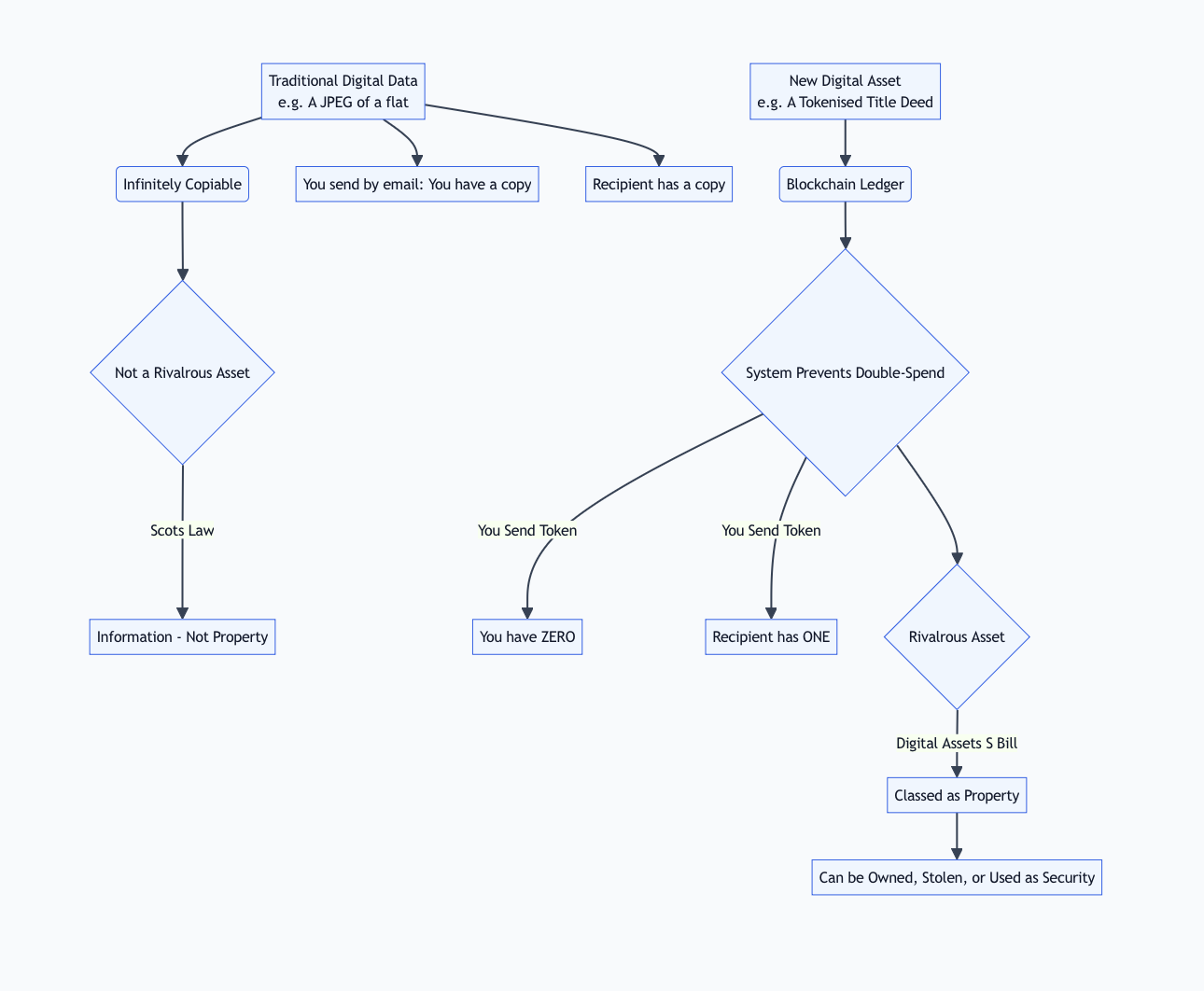
figure 1: flowchart for “rivalrous assets” in Scots Law
By establishing that a rivalrous digital asset is property, the law now provides a robust framework for everything that follows: ownership disputes, insolvency rules, the creation of valid security interests (liens), and the transfer of title.
Part 2: Why This is a Game-Changer for Traditional Property Investors
If you are a property investor who manages a portfolio of buildings or flats, digital assets might seem like a distant, volatile world. However, this legislation directly links your world to blockchain efficiency. It is the missing connection that allows Scottish "heritable property" (land and buildings) to be effectively linked to the digital ledger, which directly connects your world to the efficiency of the blockchain.
1. Massive Injection of Liquidity
Traditional real estate is notoriously illiquid. Selling a building takes months. Selling 10% of a building is almost impossible. Tokenisation, backed by this new law, changes this equation. It allows ownership of a physical asset to be divided into thousands of digital "tokens" that can be traded in minutes. This provides property owners with access to liquidity without having to sell the entire asset.
2. Fractional Ownership and Diversification
This also changes the buyer pool. By reducing the minimum investment to the price of a single token (potentially £1,000 or less), property becomes accessible to a globally distributed network of smaller investors. For existing portfolio managers, it allows easy diversification. Instead of owning 100% of one building, you could own 10% of ten different buildings, significantly reducing your risk.
3. Reduced Costs and Faster Transactions
Blockchain transactions are fast and transparent. When tokens are traded, there is no need for months of conveyancing for every small fraction sold. The settlement happens almost instantly on the ledger. While a master "heritable title" will always exist in the Land Register of Scotland, the underlying beneficial interest can be traded cheaply and continuously.
Part 3: The Blueprint: How Real Estate Tokenisation Works in Scotland
We believe in making complex processes simple. Here is a simplified breakdown of how traditional property investors can now use this framework to tokenise Scottish real estate, with full legal backing:
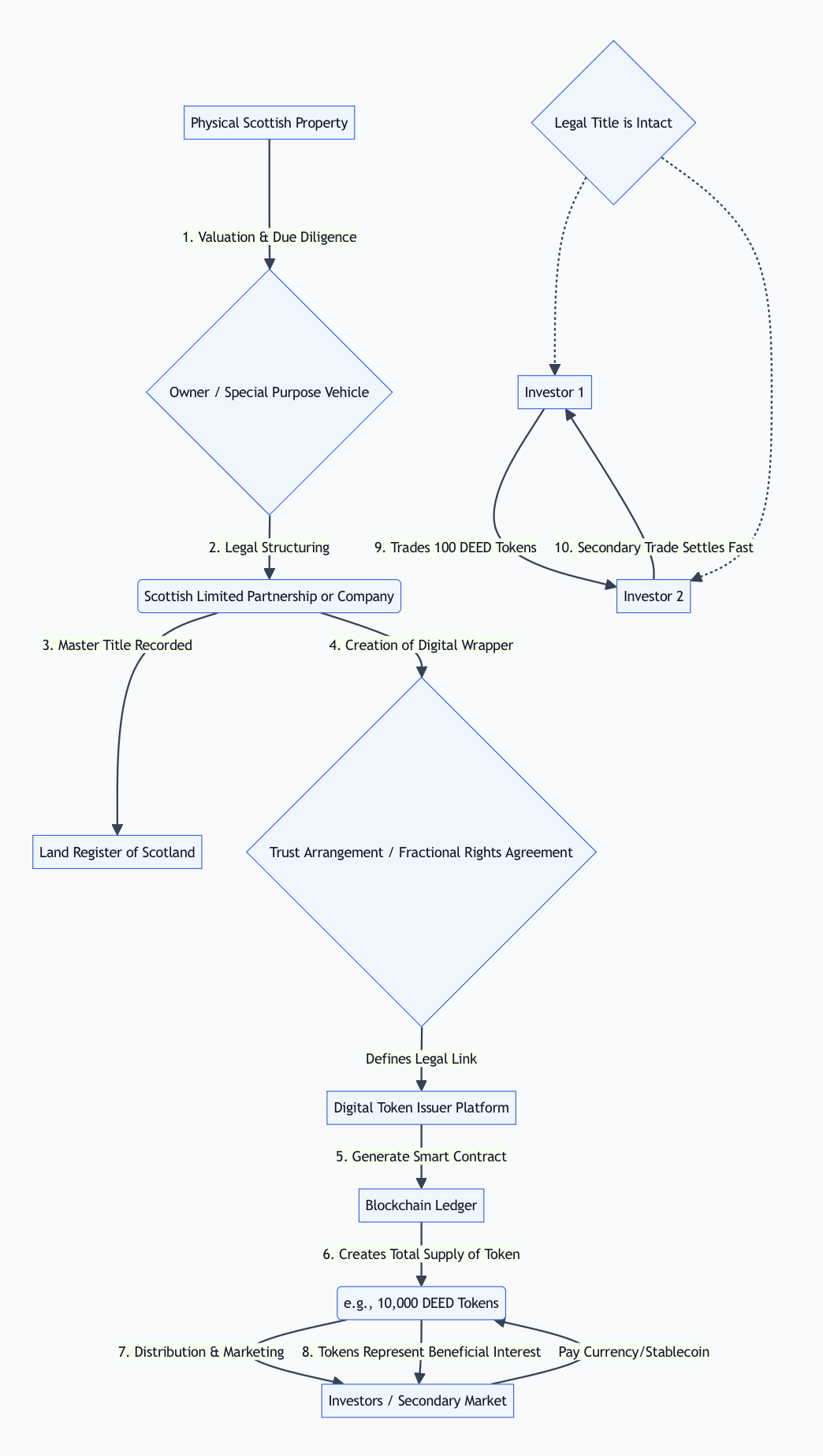
figure 2: Tokenisation process for real estate
The Legal Magic that Connects the Two Worlds
The problem has always been: How do you ensure the token truly represents the building? The solution is usually not to put the Land Register itself on the blockchain (yet). Instead, we utilise existing Scottish corporate law to create a bridge:
The Vehicle: The property owner transfers the master heritable title to a Special Purpose Vehicle (SPV), such as a Scottish Limited Partnership (SLP) or a Limited Company. This SPV exists solely to hold the property.
The Rights: We draft a "Digital Wrapper" — a robust legal agreement that states that the SPV holds the property in trust for the benefit of the token holders. The tokens represent your percentage claim on the income, capital appreciation, and voting rights of that SPV.
The New Law’s Role: Previously, the "token" representing this right might not have been recognised as a valid, transferable object of property itself. The Digital Assets (Scotland) Bill ensures that this token is a legally robust property interest.
When you own the token, the Scottish courts now recognise you as the owner of that specific interest. When you trade the token, the transfer of ownership is legally valid.
Conclusion: ProTech Legal is Ready to Build Your Future
The passage of this Bill is not the end of the journey; it is the starting point. It has established a level playing field and the legal certainty that businesses and investors require to prosper. Scotland is now positioned as one of the most attractive destinations in the world for FinTech and real estate innovation.
At ProTech Legal, we are uniquely equipped to help you turn this into reality. As a remote-first, paperless practice committed to sustainability, we believe that efficiency and innovation must go hand in hand.
We are ready to:
Draft the legal wrappers for your tokenised offerings.
Structure the SPVs needed to hold your heritable property.
Advise traditional investors on how to safely navigate these new digital markets.
The future of property is digital, decentralised, and efficient. Now, thanks to the Scottish Government, it is also legally secure.
This article is intended to provide high-level reference and information only. It does not constitute legal or financial advice. It has been prepared on the basis of the Digital Assets (Scotland) Bill as at 18 March 2026. If you require legal advice, please contact ProTech Legal for more details and assistance.
If you are a property investor or a developer interested in exploring real estate tokenisation, book an initial legal appointment today and let’s discuss how we can build your future.